Here's the short answer to every Naeba Kagura ski guide question you've got: base at Kagura if you ski, base at Naeba if you're travelling with people who don't. They're joined by the Dragondola, the longest gondola in the world at roughly 5.5km, so you can ski one and sleep at the other. But don't make the mistake of thinking they're the same resort with two names. They're chalk and cheese.
What Naeba actually is
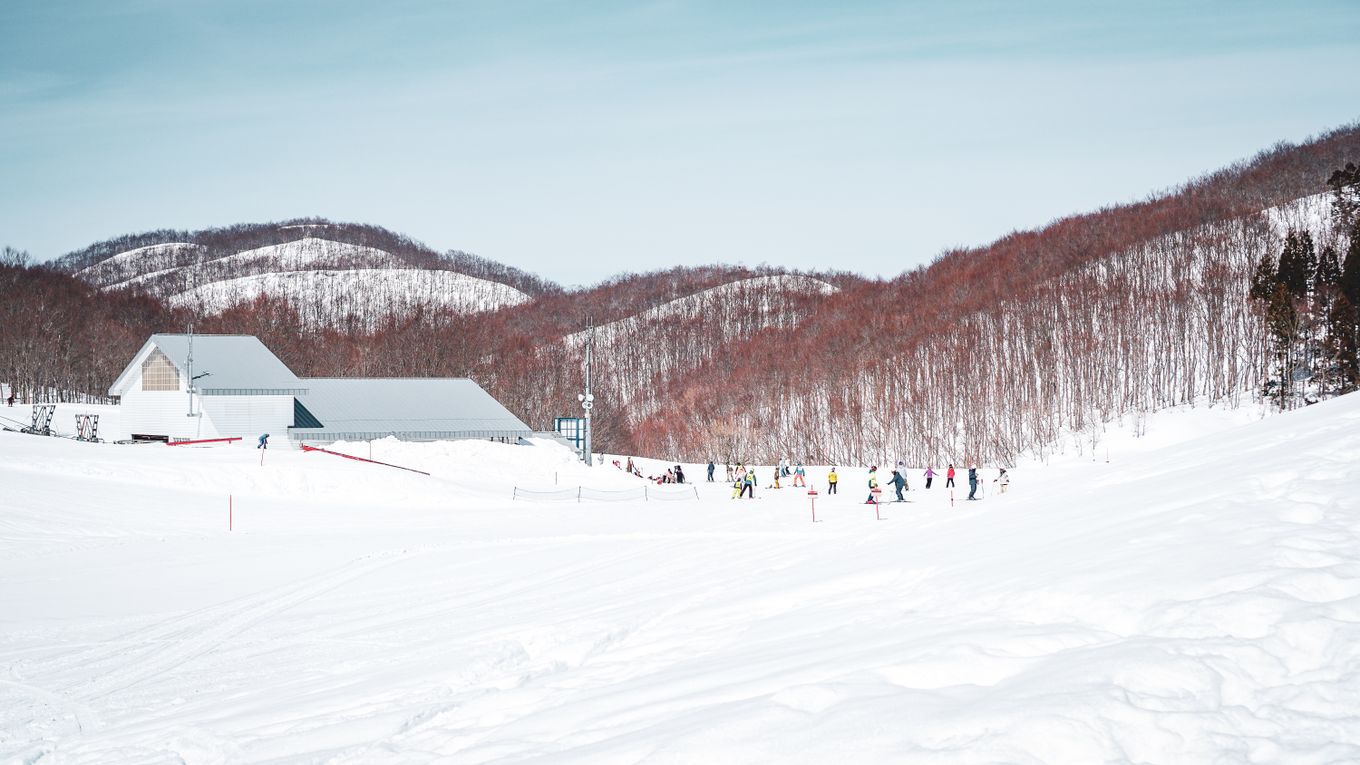
Naeba is a Prince Hotel resort built in the bubble-era 1980s, and it still looks and feels like it. One enormous hotel complex, multiple restaurants, an indoor pool, a bowling alley, the works. It's the kind of place where you could ski for a week and barely need a jacket outside the lift line.
The terrain is mostly groomed cruisers. Wide, well-maintained, confidence-building runs that are brilliant for intermediates, families and anyone still finding their ski legs. If you've got non-skiers in the group, kids doing their first turns, or you just want a resort with actual infrastructure instead of a vending machine and a prayer, Naeba delivers.
What it isn't is a powder resort. Naeba sits lower and further from the coast than Kagura, so while it still gets decent dumps, it's not the reason people fly across the world to ski Niigata.
What Kagura actually is
Kagura is three connected ski areas, Kagura, Mitsumata and Tashiro, and it's the real reason this whole region makes it onto serious powder hounds' lists. Higher elevation, more exposure to the Siberian snow machine (you can read the full science on that in our piece on why Japan gets so much snow), and genuinely wild, high-alpine terrain once you get up top.
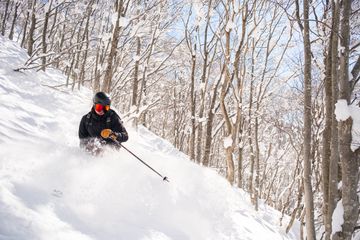
The top of Kagura opens into broad, often ungroomed bowls with serious off-piste potential, and there are marked gates into backcountry-adjacent zones for those who know what they're doing. It's not Niseko-level infamous for sidecountry, but it's a different animal to the groomers down at Naeba.
Accommodation at Kagura is thin. A handful of small lodges and pensions near Mitsumata, nothing like Naeba's hotel towers. Most people who ski Kagura hard actually sleep at Naeba or down in Yuzawa and commute via the gondola or shuttle.
The Dragondola: ride it, don't rely on it
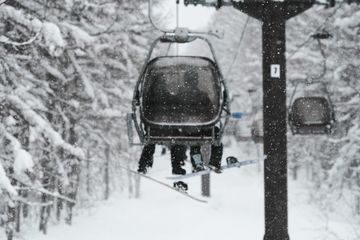
The gondola connecting the two is a genuine novelty, a 25 to 30 minute ride through forest and valley that's worth doing at least once for the views alone. But it has operating hours that don't always align with first lifts or last chair, and it occasionally closes for wind. If your plan hinges on bouncing between Naeba and Kagura every single day, check current gondola hours on the official site before you lock in accommodation. Don't assume it's running exactly when you want it.
Naeba vs Kagura at a glance
- Terrain style: Naeba is groomed cruisers, Kagura is open bowls and off-piste
- Best for: Naeba suits families and mixed-ability groups, Kagura suits powder-focused skiers and boarders
- Accommodation: Naeba has a full resort hotel complex, Kagura has limited small lodges
- Vibe: Naeba feels like a corporate ski city, Kagura feels like a proper mountain
- Access: Both are reachable from Echigo-Yuzawa Station via shuttle bus, making this one of the easier Niigata resorts to hit without a car
Getting there without losing a day
This is one of the big selling points nobody talks about enough. Jump the Joetsu Shinkansen from Tokyo to Echigo-Yuzawa, then it's a connecting bus to either resort. No rental car, no icy mountain pass driving, no stress. If you want the full breakdown on how this stacks up against other no-car options around the country, our train vs bus vs shuttle guide covers it properly. Naeba Kagura is genuinely one of the most accessible powder regions in Japan for a long weekend out of Tokyo.
Lift passes and when to buy
There's a combined Naeba-Kagura pass that covers both sides plus the Dragondola, and it's generally the smarter buy if you're planning to ski both. Pricing changes season to season so check current rates on the Prince Hotels ski site rather than trust any number you read online, including this one. If you're trying to figure out whether a multi-resort pass makes sense for your whole trip, have a look at our Japan ski pass comparison.
Gear check: Kagura wants fatter skis
If you're bringing your own gear and splitting time between the two, pack for Kagura, not Naeba. The groomers at Naeba will ski fine on anything, but Kagura's deeper days reward something wider underfoot. Our honest width guide to powder skis is worth a read before you pack the bag.
My take as an Aussie who skis Japan every year
I'll be straight with you. I used to write Naeba off as the resort for people who don't actually ski. Fair call, mostly. But once I started treating it as a comfortable base and using Kagura as the day-mission via the Dragondola, the whole region clicked.
It's not Hakuba's scale and it's not Niseko's snow consistency, but as a two-in-one trip accessible straight off the shinkansen with zero driving, it's hard to beat for a long weekend. The mistake most first-timers make is staying purely at Naeba and never bothering to ride up to Kagura's top terrain. That's like going to Niseko and only skiing the bunny slope. Get up there.
FAQ
Can I ski Naeba and Kagura on the same lift ticket?
Yes, there's a combined pass covering both resorts and the Dragondola connecting them. Confirm current pricing and validity on the official Prince Hotels ski site.
Is Kagura good for beginners?
The lower slopes are manageable, but the appeal of Kagura is the higher, wilder terrain, which isn't beginner territory. Beginners will have a better time sticking to Naeba's groomers.
How do I get from Tokyo to Naeba or Kagura without a car?
Take the Joetsu Shinkansen to Echigo-Yuzawa Station, then a connecting bus to either resort. It's one of the more straightforward no-car options in Japan.
Is the Dragondola worth doing if I'm not skiing both resorts?
Honestly, yes, just for the ride. It's a long, scenic trip through forested valleys that's a novelty even if you're not using it to connect ski days.
When's the best time to ski Kagura for powder?
Mid-winter, January into February, generally gives the most reliable snow at Kagura's higher elevations, but always check recent snow reports before locking in dates.